Where it started
Making a toy robot dog move involves more than spinning motors. Support, energy buildup, drive and recovery need to work together, alongside voice interaction and hardware constraints.
My contribution
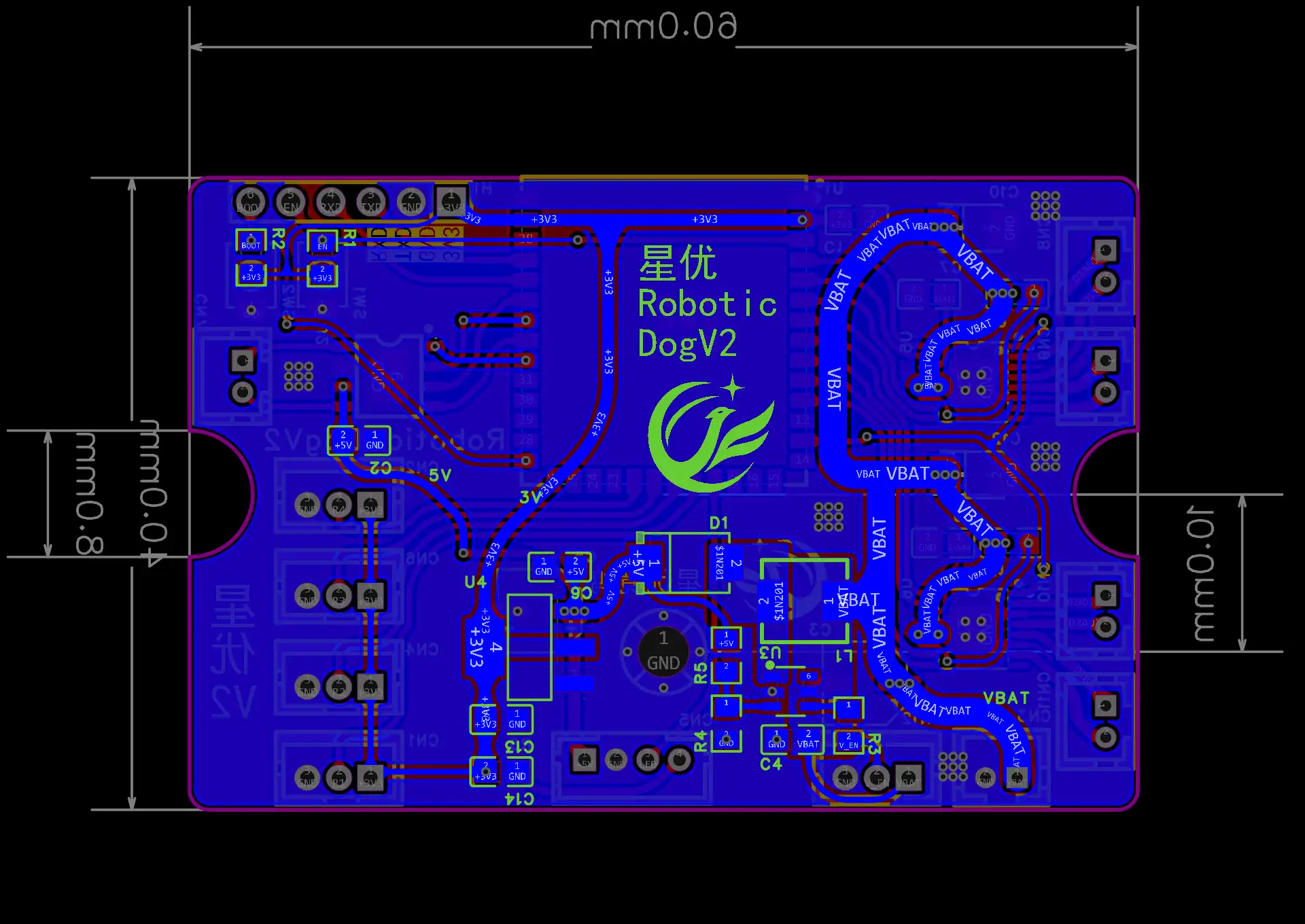
I led the AI interaction, motion implementation concepts and physical logic of the action system, as well as hardware selection and design. My work spanned action phases, tuning, firmware deployment and physical integration.
A good motion is an agreement between software and the physical world.
Three engineering decisions
Understand the body before the motion
Organize walking, turning and rolling through coordinated leg phases and staged state machines, with explicit support, drive and recovery phases.
Use feedback to inform control
Combine DC motors, potentiometer ADC feedback and DRV8833 drivers with feed-forward, dead zones and timed drive, choosing control methods for each action.
Treat recovery as part of the experience
Address ADC wraparound, direction learning and load differences through circular shortest paths, early braking and direction-change protection.
What came out of it
- Firmware was deployed to hardware and physically debugged.
- The robot dog and AI plush products were exhibited and received purchase contracts. Customer identities, quantities and values remain private.
- Early action tests and later unified-firmware checks are reported separately; neither establishes that every version passed.
On-device integration tested; verification is version-specific
What's next
Build reproducible hardware records by action, firmware version and board configuration, and prepare a shareable assembled-device demonstration.
Project notes are grounded in reviewed source, experiment records and personal confirmations.
Content reviewed: 2026.10.28